Powering across australia
Spring 2026
Images and Story by Emily Power
After 550 days living on the road and hundreds of towns in our rear-view mirror, there is one region that symbolises just how far we have come.
A night camped beside a dry creek in the outback, with only kangaroos and flies for neighbours, would eventually show me I was no longer a city girl at heart.
Anyone who has driven through remote, Far North South Australia will attest to its beauty and cruelty. On one hand, the ochre expanse, delicate Sturt’s desert peas, plumes of dust and iconic roadhouses are the stuff that makes it onto postcards. The cavalcade of overheated four-wheel drives and wonky caravans with broken axles tells the other side of the story.
We drove from Adelaide to Port Augusta and spent the night on a cattle station at the base of the Flinders Ranges. This was the moment the landscape spoke to me. The coastline we have traversed for most of this trip is breathtaking, but this—ancient and monolithic—felt less like scenery and more like a presence.
Something shifted in me and I realised I was finally experiencing the soul of Australia. The deeper we drove into the outback, the more I felt it.
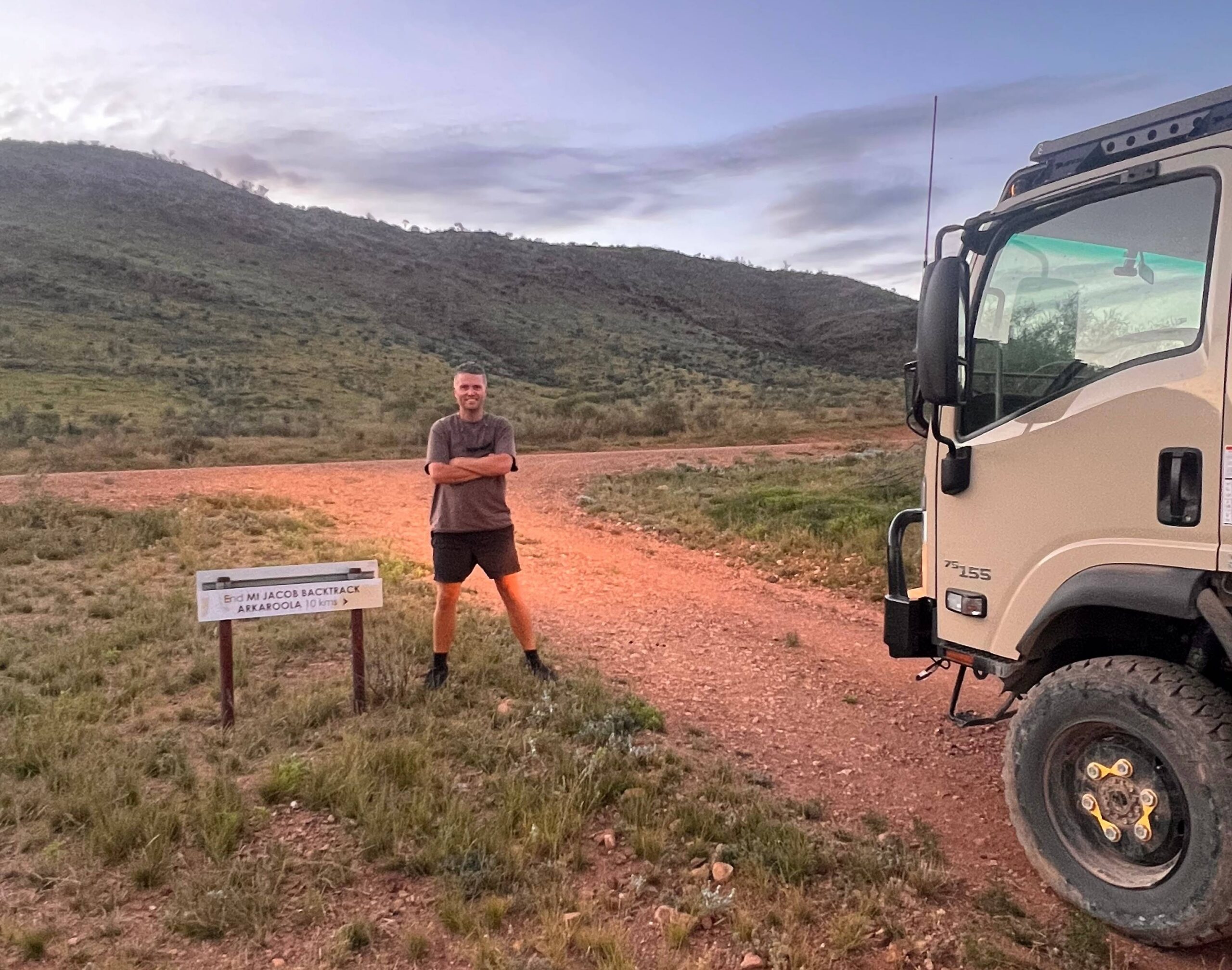
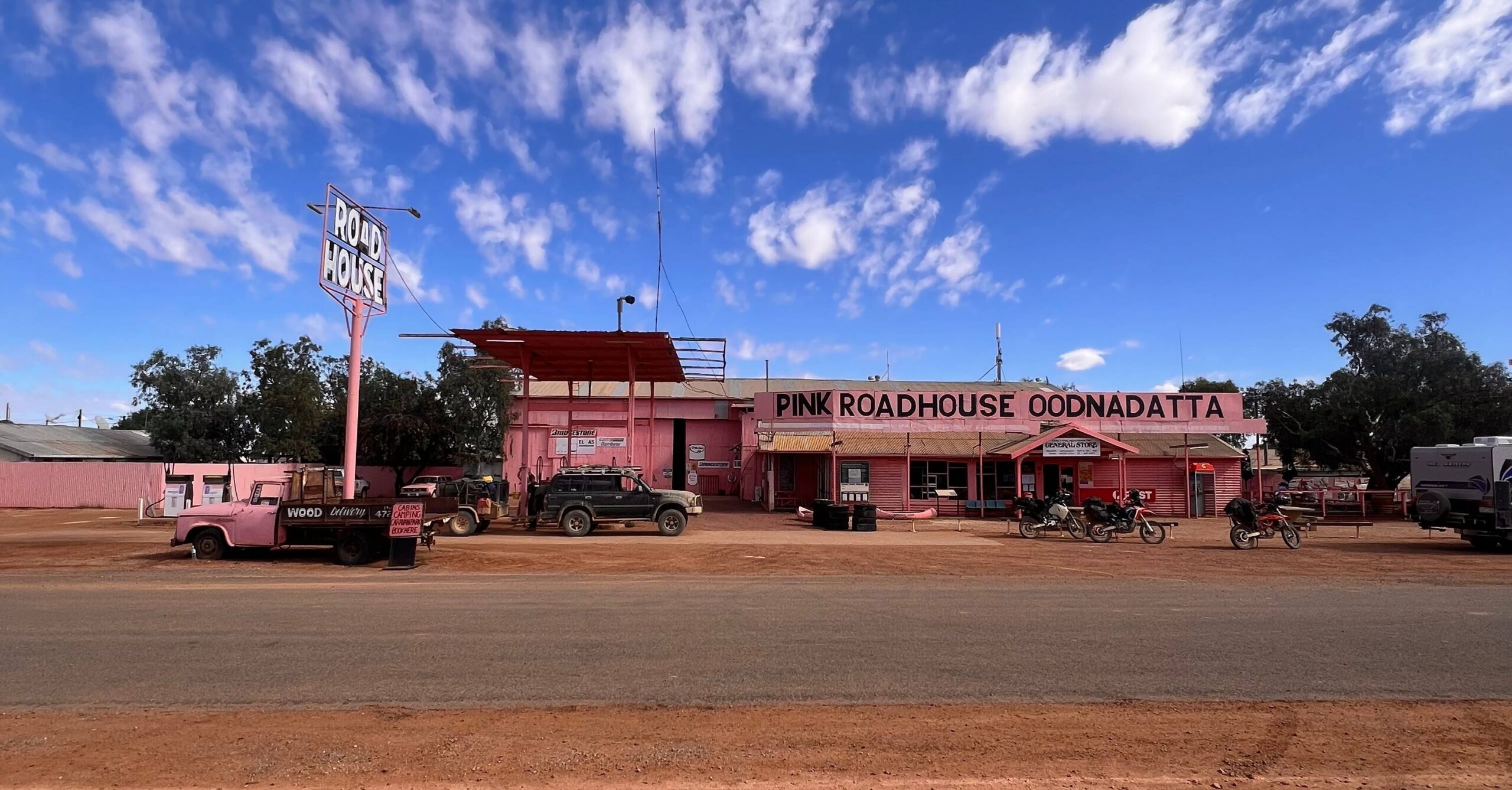
We journeyed through Quorn, Arkaroola and Leigh Creek, joined the Oodnadatta Track at Marree and went onwards through William Creek, Oodnadatta, Marla and Coober Pedy.
A highlight was a two-hour flight over Kati Thanda–Lake Eyre, which took off from William Creek. The lake is full of water for the first time in 50 years. The vastness went on forever and it was so still, broken only by the occasional ripple of pelicans landing.
In Coober Pedy, the fashion lover in me was drawn to the opal stores, but the gems weren’t what made that visit special. My mother’s brothers mined opals there for many years and it was emotional for her to see photos of James and me in the town they called home.
Like my uncles before me, I learned Mother Nature is in control in the outback. A downpour caused major road closures and we had to adjust our itinerary. Our plan to spend one day in the ghost town of Farina turned into four days while we waited for the Oodnadatta Track to dry up and open.
Frustration turned to gratitude. We had not expected to be in Farina for the opening of Australia’s only underground bakery, but thanks to the rain, we were there for the launch and had our fill of the pies and bread made in a 140-year-old Scotch oven.
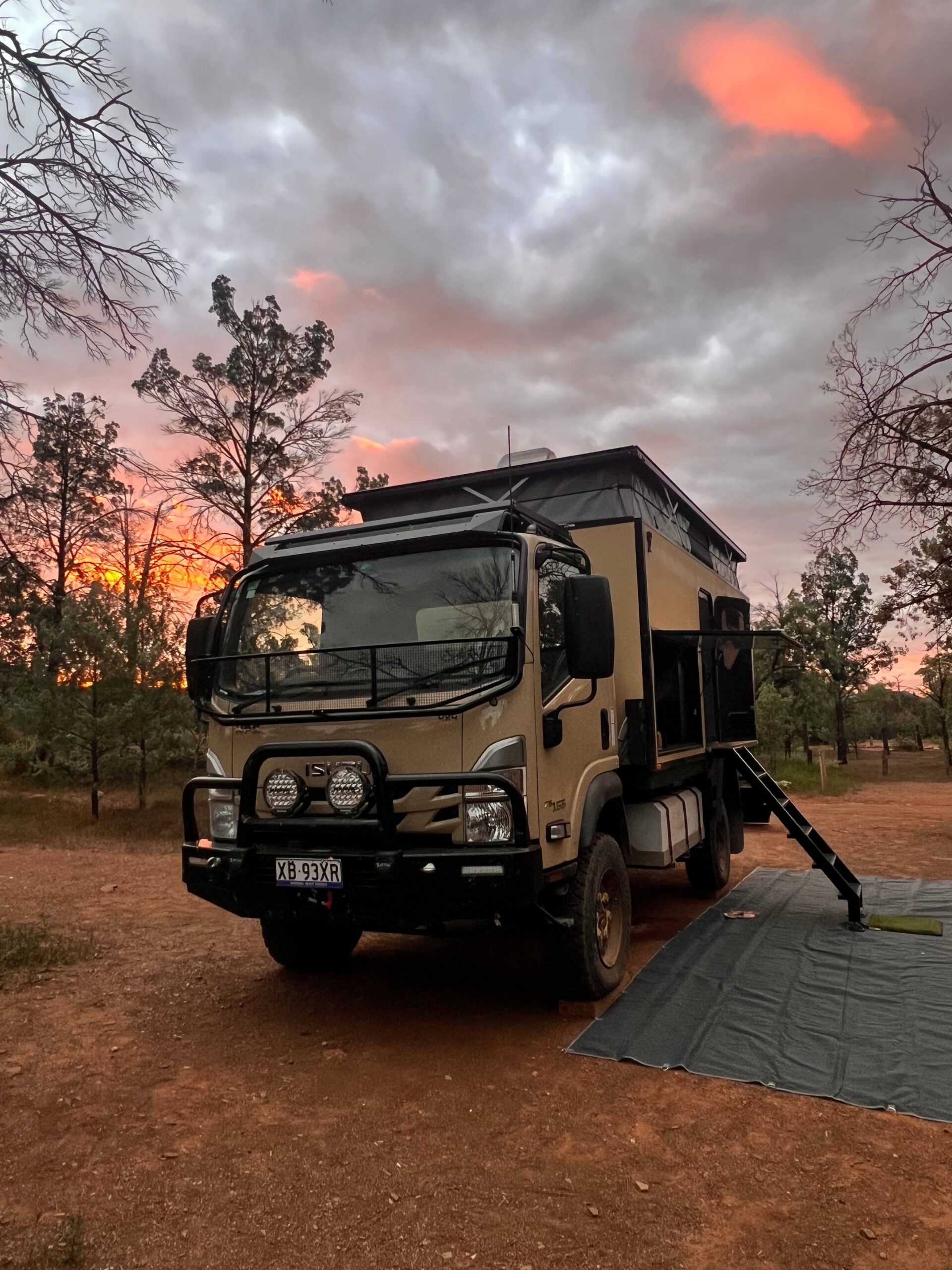
Meanwhile, our motorhome finally has scratches from charging through wild tracks. It had been pristine, having spent most of its first year on bitumen roads, despite being built for more challenging terrain. James regards each scrape as a souvenir. As for me, it reminds me of the days I’d wear a new pair of heels out on the town and scuff the soles. As I write these words, I am in a pair of Velcro hiking sandals. How the world has changed.
My wardrobe and the motorhome’s paintwork aren’t the only things that have changed. My mindset—once nervous and hesitant—is different, too. The proof was at that dry creek camp, beside an abandoned rail bridge, outside Leigh Creek. While I happily set up, James remarked that if he had brought me to this place a year ago, I’d have panicked.
Isolation for me once meant danger, but now it represents peace. We can go several days without seeing another soul if we want.
However, civilisation beckoned and we swapped solitude for the city, returning to Adelaide via Coober Pedy to catch up with old friends and take care of the mundane—dentist and doctor appointments. When the last doctor was ticked off the list, we revved the engine and beelined for Ceduna to begin our crossing of the Nullarbor Plain into Western Australia. We deliberately chose the Old Eyre Highway, an unsealed track, over the main tourist route. The Old Eyre was once the major arterial, but the sealed Eyre Highway became more popular when it was finished in the 1970s.
We were tempted to take the newer road but the Old Eyre, with its relics of sheep stations, saltbush plains and endless corrugations, appealed to our sense of adventure. Parts of the track are so bumpy that we slowed the motorhome to 20 km/h to avoid damage. We have the time, as permanent travellers, to tackle these roads less travelled, and that patience is rewarded by landscapes of an impossible scale.
Granted, the Eyre Highway has its own highlights and the most famous is the Bunda Cliffs along the Great Australian Bight. Many campers share social media posts of their caravans parked on the edge, and just as many have been criticised for ignoring major cracks and safety warnings.
I told James there was no way I was sleeping next to 120-metre cliffs just for an Instagram photo, and I would choose the Old Eyre Highway any day. Perhaps a bit of that city girl is still in me, but she’s just rougher around the edges.