Food for Thought
STORY by HENRY Wallace | Image by Mark Surridge
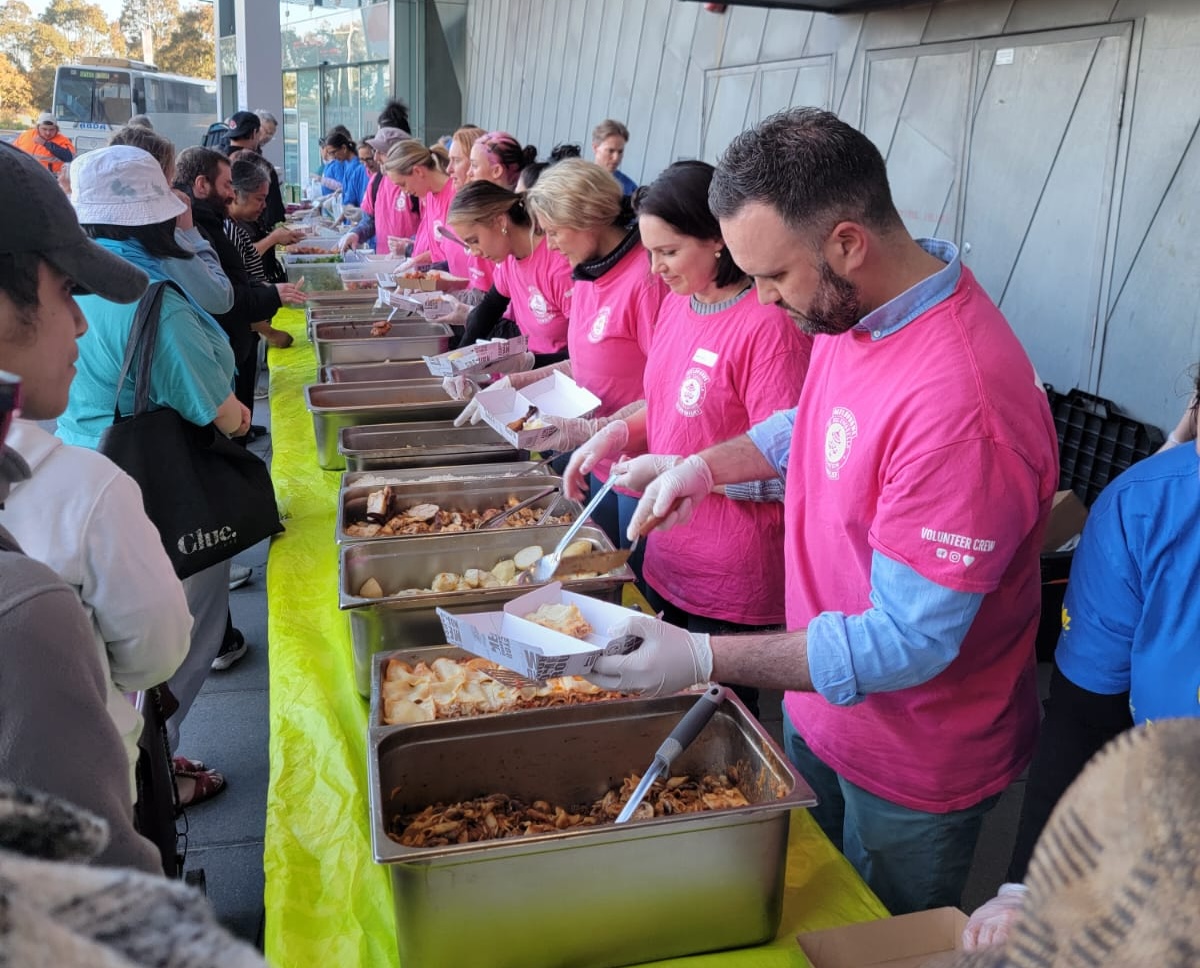
The iconic Federation Square in central Melbourne on Wednesday and Thursday nights is looking busier than ever. And sadly, it’s not for the right reasons.
“We’ve gone from serving around 250 meals a night to 350,” says Victoria Wilson, Chief Operations Manager of The Big Umbrella Foundation. Since 2010, The Big Umbrella Foundation (TBU) has been creating and serving restaurant-quality meals to people experiencing food insecurity and homelessness, using rescued food and produce served by a team of dedicated volunteers.
“We’re seeing a lot more younger people, those under 25, needing meals. More women are coming through too. It used to be about 70/30 male to female, but that gap is closing to around 60/40.”
The 2025 Foodbank Australia Hunger Report describes a hunger crisis across the country that is “persistent and endemic,” with one in three households facing food insecurity. In other words, they don’t know where their next meal is coming from. On the frontline of this crisis are organisations like TBU who are seeing first-hand how crippling and confronting the cost-of-living crisis is.
“People apologise. They’ll say sorry for being there, sorry for needing the service. That says a lot about where people are at,” said TBU Chief Executive Justin Dickinson.
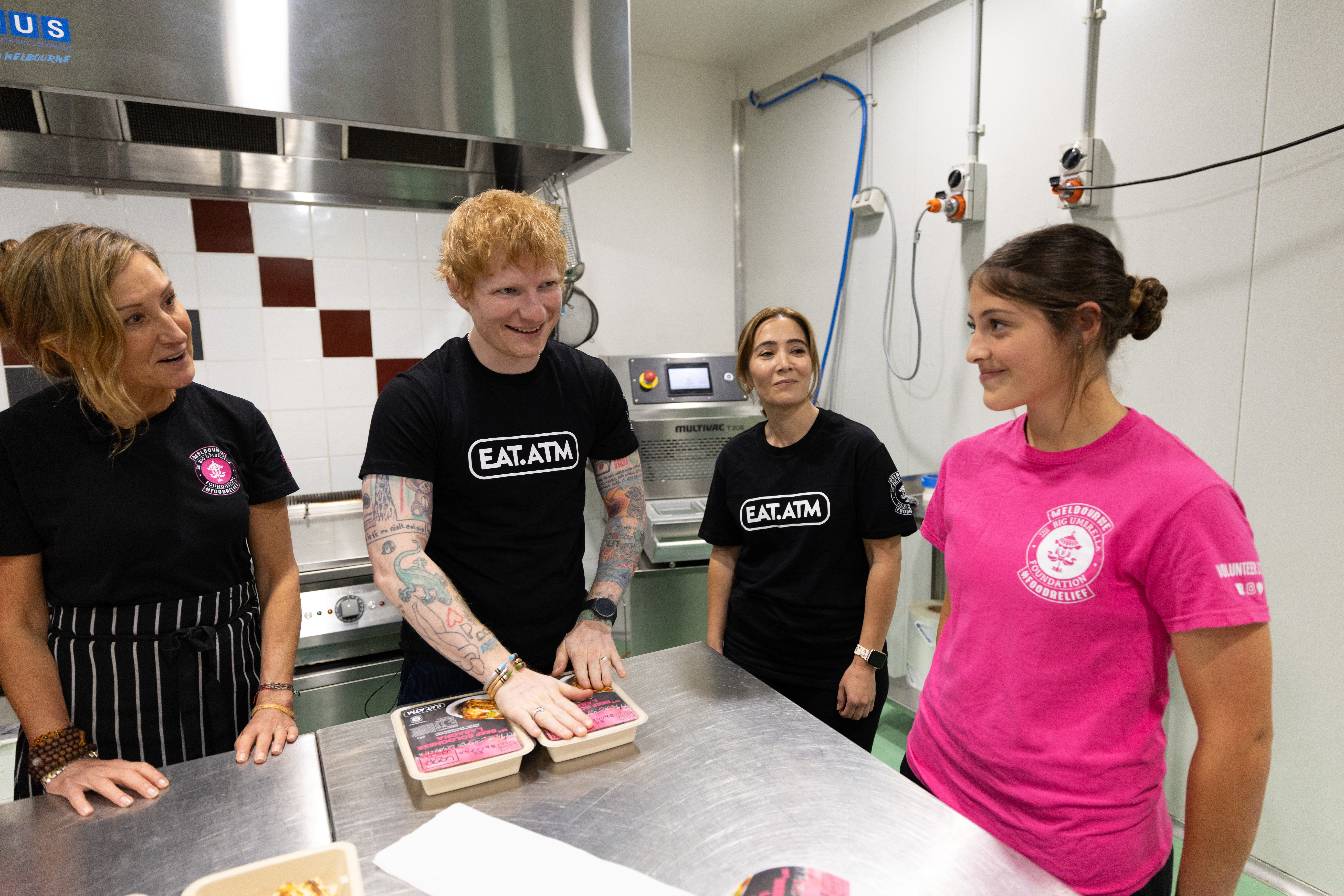
To help address some of the stigma and embarrassment people feel for needing help, TBU has introduced the innovative EAT.ATM. It is a hot food vending machine that delivers both free and paid nutritious meals, 24 hours a day, seven days a week. “The dignity aspect is the biggest part for me,” says Dickinson. “You don’t have to line up. You just walk up to a machine and get what you need.”
The machine stores up to 100 individually packaged frozen meals, heated and ready in under two minutes, accessed via a card, coupon or a QR code. The machine operates on a “buy one, give one” model in order to fund a free meal for those who need it.
TBU is also partnering with major music artists, including Metallica, Vance Joy and Ed Sheeran, where each artist provides a homemade recipe packaged into 100,000 branded frozen meals. The goal is to sign 10 artists and produce one million meals over the next five years and, ultimately, take this concept across Australia. TBU’s mission has since grown into what Victoria Wilson now describes as a permanent frontline response to the cost-of-living crisis itself.
“Access to food, water and safe housing should be a basic human right in a wealthy country like Australia,” she says. “That’s what we’re fighting for. We have people coming to us who receive no government support at all.”
Charities themselves are under immense strain. Corporate bookings for TBU’s team-building and volunteer experience programs, a key revenue stream for the organisation, have dropped off, with everyone under cost pressures. “Our supermarket partnerships have been a constant, thankfully steady since COVID. It’s more the types of products being donated that have changed,” she said.
TBU is working with a legal expert to help produce a policy paper that outlines the true cost of homelessness and food insecurity, including lack of housing and medical care. They want all charitable organisations across the nation represented to collaborate, share resources and work together against the crisis of food insecurity.
“There’s nothing more satisfying than watching someone leave with a full belly and a big smile,” says Justin Dickinson. “That kind of social connection, that rehabilitation, is something we can genuinely offer.”